30-Year Treasury Auction Clears at 5.058% With Mixed Demand
The $22B 30-year bond auction drew heavy foreign buying but weak domestic participation, earning a B- grade.
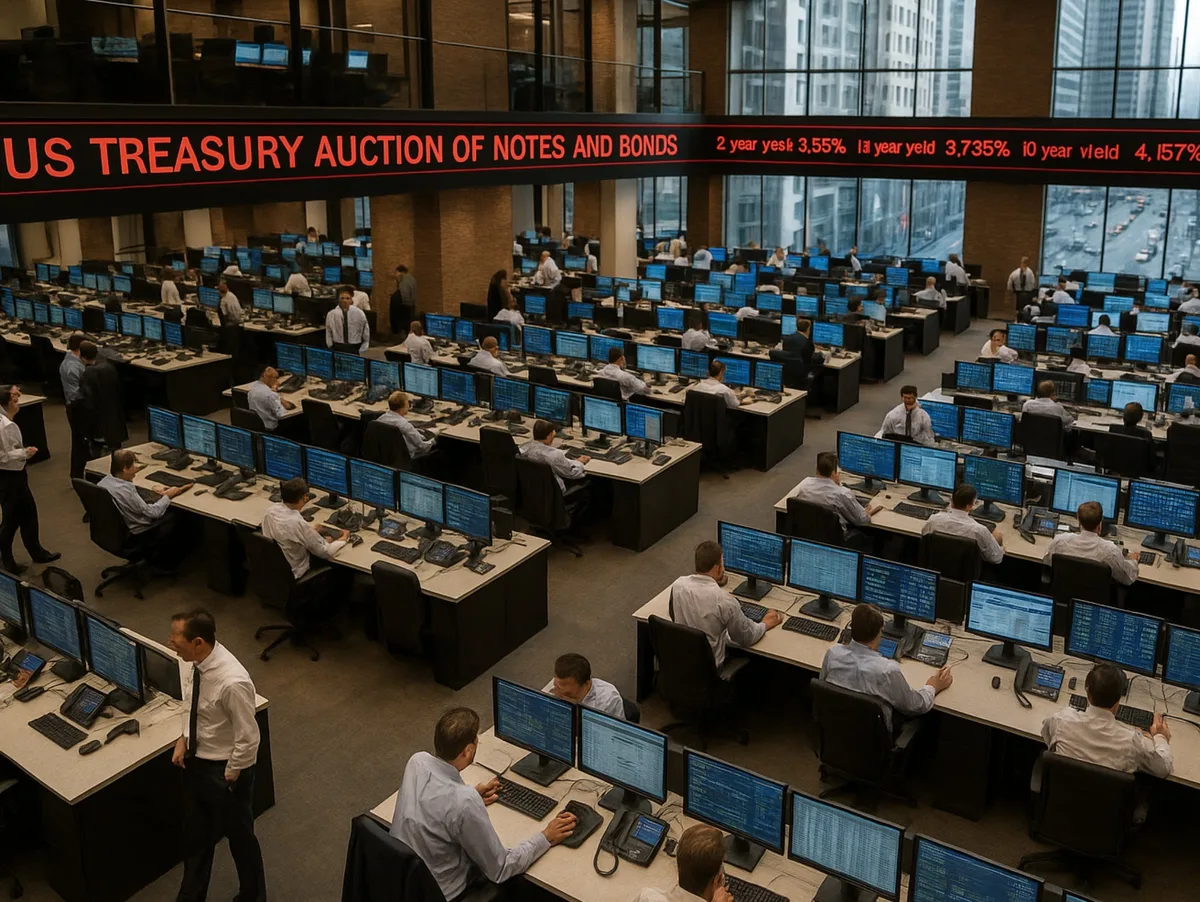
The U.S. Treasury wrapped up its weekly coupon auction slate by selling $22 billion in 30-year bonds at a high yield of 5.058% — just a hair below the when-issued level of 5.061% heading into the sale. That negative tail of -0.3 basis points is slightly better than the recent average of -0.2 bps, which sounds good on paper. But don't get too excited.
The real story is who showed up to buy. International investors (indirects) gobbled up nearly 78% of the auction — way above their six-auction average of 65.1%. Meanwhile, domestic buyers (directs) took only 12.24%, roughly half their normal 24% share. Those two figures offset each other, so the net demand picture lands somewhere in the middle. Bid-to-cover came in at 2.44x versus a 2.43x average — basically a coin flip from normal. Dealers absorbed just 10.05%, slightly below their average.
Read more Prediction Markets Raise Insider Trading Red Flags for Wall Street →
Forexlive graded this auction a B-, pushing back on CNBC's Rick Santelli who handed it an A-. The argument is straightforward: strip away the dramatic shift in the direct/indirect mix and almost every other metric is right at its average. A near-average auction at a 5% yield on the long end isn't a disaster, but it's not a ringing endorsement of U.S. fiscal credibility either.
For traders, the takeaway is nuanced. Foreign demand holding firm at these yield levels suggests the world isn't running from Treasuries yet — but domestic institutions are clearly stepping back. Watch whether that domestic absence persists in future auctions. If it does, the long end could face real pressure. A 30-year sitting above 5% is already a loud signal that the bond market wants a premium for holding duration.
Continue reading at Forexlive