Rubio's Lebanon Peace Framework: Hope Meets Hard Reality
Washington unveiled a Lebanon security framework, but Hezbollah's refusal to disarm and Iran's regional ambitions keep a deal far from certain.
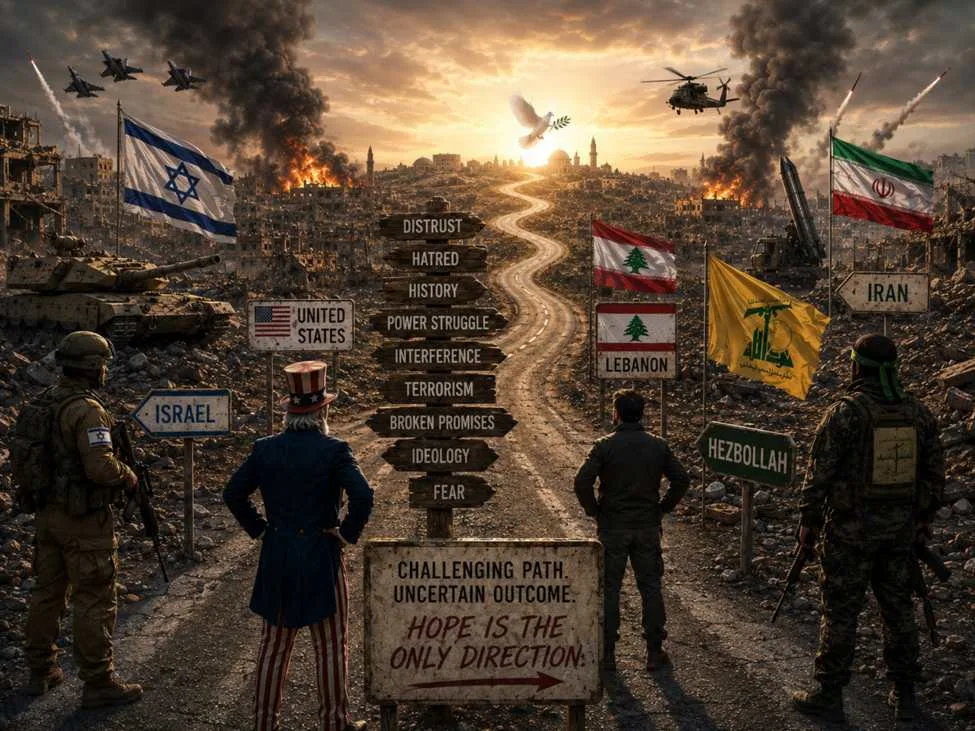
Secretary of State Marco Rubio dropped a serious-sounding Lebanon framework this week — one that would disarm Hezbollah, restore Beirut's sovereignty, and let Israel pull back to its borders once the threat is neutralized. Washington is putting real money behind it too: $100 million in immediate humanitarian aid and over $30 million earmarked to reimburse the Lebanese Armed Forces. A trilateral military coordination group would oversee the whole thing. On paper, it looks like a workable deal. In practice, you're trading in one of the most combustible regions on the planet.
The core problem is Hezbollah. The group has flatly said its weapons aren't on the table without broader guarantees. Its leadership frames the armed wing as a "resistance" force, not a militia to be bargained away. That puts Hezbollah on a direct collision course with the framework's central demand — full disarmament and dismantlement of its military infrastructure. You can't square that circle without someone backing down, and Hezbollah has zero incentive to blink first.
Read more White House Has No Democratic Picks for SEC and CFTC Seats →
Israel's calculus makes the deal even trickier. After watching UN Resolution 1701 fail to stick following the 2006 war, Israeli policymakers aren't interested in another ceasefire with soft teeth. They want Hezbollah fighters and hardware physically removed from the northern border, missile threats eliminated, and enforcement mechanisms that actually hold. That's a high bar — and Israel has every reason to be skeptical.
Then there's Iran. Tehran treats Hezbollah as a strategic asset, a deterrent against Israel and a pillar of its regional influence in the Levant. Any framework that guts Hezbollah's military capability is essentially asking Iran to voluntarily shrink its footprint in the Middle East. That's not a negotiation — that's a demand. The web of competing interests here — Israel, Lebanon, Hezbollah, Iran, and the U.S. — means there are dozens of ways this unravels and very few paths to a durable settlement.
Continue reading at Forexlive