Americans Are Socializing Less Across Every Age Group
A new report finds Americans of all ages are cutting back on face-to-face social time, signaling a broad cultural shift.
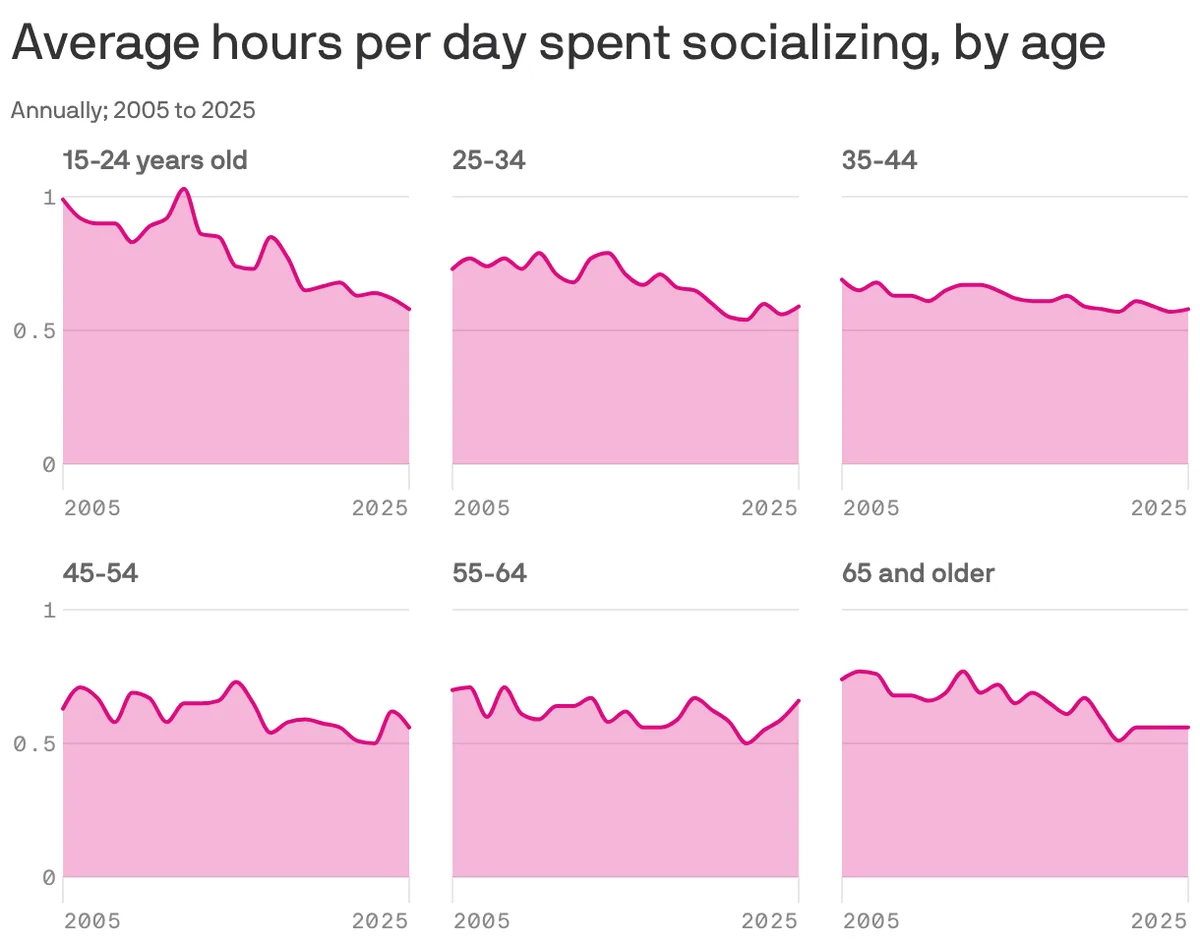
Something is quietly reshaping American life, and it cuts across every generation. According to reporting by Axios, Americans of all ages are spending less time socializing — and that's not just a pandemic hangover anymore. This is a durable, structural trend worth paying attention to.
The pullback isn't limited to Gen Z glued to their phones or retirees staying home. Every age cohort is logging fewer hours with friends, family, and community groups. That kind of across-the-board retreat is rare. When the data spans from teenagers to seniors, you're not looking at a quirky generational habit — you're looking at a society-wide pattern.
Read more June Existing Home Sales Miss Hard at 4.09M Annual Rate →
The implications run deeper than anyone's weekend plans. Less socialization historically correlates with lower consumer confidence, reduced discretionary spending, and weaker community economic activity. Bars, restaurants, event venues, gyms — any business banking on foot traffic and spontaneous human connection should be watching this trend closely. It's a slow-moving headwind hiding in plain sight.
For individual investors and traders, the consumer discretionary sector deserves a second look. If Americans are structurally pulling back on social activities, the companies selling experiences — live entertainment, casual dining, travel — may face longer-term demand pressure that quarterly earnings calls aren't fully pricing in yet. Secular behavioral shifts rarely show up cleanly in a single earnings beat or miss.
The honest takeaway here is that loneliness and social withdrawal aren't just public health stories. They're economic signals. When people stop showing up for each other, they eventually stop showing up for the economy too. Continue reading at axios (erica pandey).