Oil Spikes as US-Iran War Widens and Hormuz Tankers Hit
Two tankers struck in the Strait of Hormuz and a ninth night of US strikes on Iran rattle Asian markets at the open.
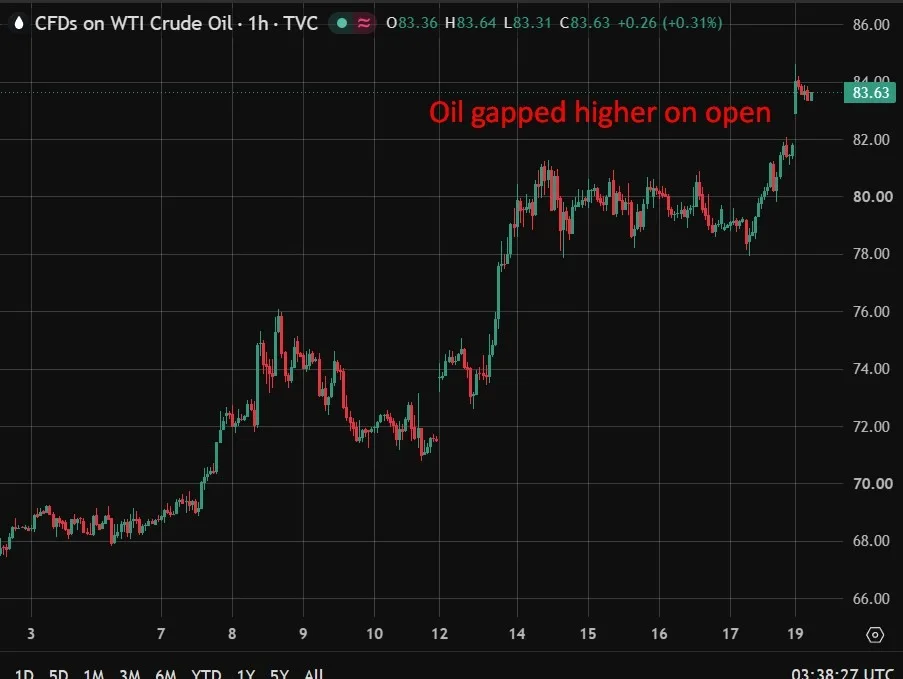
Oil gapped higher to kick off the week and it's not hard to see why. Iran confirmed two tankers were mined and blown up in the Strait of Hormuz, with UKMTO independently verifying a vessel on fire in the same waterway. That's the world's most critical oil chokepoint under direct attack — and markets are pricing it accordingly.
This isn't a one-off flare-up. The US launched its ninth consecutive night of strikes on Iran, with missiles reportedly flying from Kuwait. A US official warned that the Trump administration is actively planning for a wider war, and the military buildup is accelerating. If Hormuz gets seriously disrupted, forget a spike — you're looking at a structural oil shock.
Read more Nasdaq Climbs as Amazon Surges, Apple Drags on Weak Outlook →
Asian currencies are already feeling the heat. MUFG flagged that the oil rebound is putting serious pressure across the region, with the Indian rupee taking the hardest hit. Meanwhile, Beijing is fighting its own battle — regulators called a stability meeting and state buyers stepped in after a brutal tech-stock slide. China also held its loan prime rates steady, keeping the 1-year LPR at 3.0% and the 5-year at 3.5%, even as growth slows and the yuan firms up.
Elsewhere in Asia, the yen is on intervention watch with Tokyo on holiday — thin liquidity is exactly the environment Japan's Ministry of Finance has historically exploited to make a move. South Korea announced plans to ease won access and push toward a freely convertible currency. And chip stocks are getting crushed on China AI fears, dragging down South Korea's Kospi, which Citi just downgraded further.
Bottom line: oil is the trade right now. Watch Hormuz headlines like a hawk — every escalation is a potential catalyst. Continue reading at Forexlive.